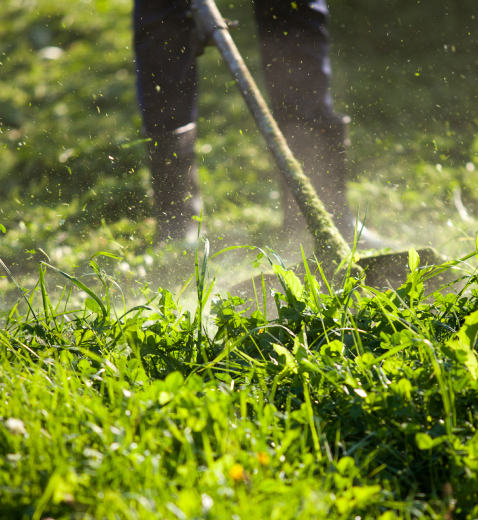
- Crabgrass is a summer annual grass, so it grows from seed each year and dies back with winter.
- LSU AgCenter says seed germination begins when soil reaches about 55 to 60 degrees, which arrives around mid-February in south Louisiana.
- A preemergence herbicide applied around Valentine’s Day is the main way to stop it in the New Orleans area.
- Established crabgrass in summer is harder to kill selectively, so pulling, mowing high and preventing next year’s crop matter more than spraying.
- LSU recommends mowing St. Augustine at about three inches, because scalped lawns with open soil are where crabgrass thrives.
- How crabgrass grows
- The February window in south Louisiana
- How to apply a preemergence herbicide
- What to do about crabgrass that's already growing
- Mowing height is your best defense
- A crabgrass calendar for a New Orleans lawn
- Crabgrass or another grassy weed
- Why crabgrass keeps coming back
- Frequently asked questions
By June the edges of the driveway are full of it: coarse, light green clumps that sprawl out flat and grow faster than the St. Augustine around them. Crabgrass is one of the most common weeds in Louisiana lawns, and most of the fight against it happens months before you see it.
At TurnKey Lawn Care, weed control is part of the lawn care we provide across the metro. If crabgrass has already moved in, request a free estimate and we’ll put together a plan for this season and next.
This guide covers how crabgrass grows, the February window that matters most in south Louisiana, what to do about crabgrass that’s already up, and the mowing habits that keep it from coming back.
How crabgrass grows
The LSU AgCenter describes crabgrass as a summer annual grass and one of the most common weeds infesting Louisiana lawns. Annual means each plant lives for one season, sets seed, and dies back when winter arrives. Because each plant lasts only one season, control means stopping the next generation. The plants you see in July came from seed that sprouted in late winter, and the seed they drop this summer becomes next year’s problem. How to recognize it in the lawn:
- Coarse, light green blades that look wider and paler than St. Augustine or centipede
- A low, spreading clump that radiates out from a center, often lying flat against the ground
- Rapid growth in summer, especially along driveways, sidewalks and bare edges
- Thin, finger-like seed heads in mid-to-late summer
- Clumps that brown out and disappear as winter sets in, leaving bare spots behind
When crabgrass dies back in winter, it leaves gaps in the lawn, and those gaps are where next year’s seed finds light and room to grow.
The February window in south Louisiana
The single most effective step against crabgrass happens before you can see it. According to LSU, seed germination is initiated in late winter when soil temperatures reach 55 to 60 degrees. An LSU AgCenter article written for the New Orleans area notes that temperatures in south Louisiana begin to reach that range around mid-February. Its advice is to apply a preemergence herbicide to the lawn around Valentine’s Day. Preemergence herbicides work by stopping seedlings as they germinate. They don’t kill crabgrass that’s already growing, which is why timing is everything. Put it down in early March in New Orleans and some of the seed has already sprouted. LSU lists several preemergence active ingredients used on Louisiana lawns:
| Active ingredient | What LSU notes about it |
|---|---|
| Dithiopyr | Preemergence control plus early postemergence activity on seedling crabgrass about 1 to 2 weeks after germination |
| Benefin plus trifluralin | Preemergence activity only |
| Pendimethalin | Preemergence activity only |
LSU also cautions to always apply these herbicides to established turf. If you’ve just laid sod or planted plugs, check the label before using any preemergence product on that area.
Want this handled instead of doing it yourself?
Send the details and we will price it. Free estimate, no obligation.
How to apply a preemergence herbicide
A preemergence application is straightforward when the timing is right. Here’s the sequence we’d follow for a typical New Orleans lawn:
- Mark the date. Plan the application for early to mid-February, ahead of the mid-February warm-up LSU describes for south Louisiana.
- Choose a product labeled for your grass. Confirm the label lists St. Augustine, centipede, zoysia or Bermuda, whichever you have.
- Measure the lawn. Rates on the label are per 1,000 square feet, so an accurate measurement keeps you from under- or over-applying.
- Spread evenly. Use a calibrated spreader and cover the edges along drives and walks, where crabgrass tends to start.
- Follow the label on watering in. Many granular products need rain or irrigation to move into the soil, and the label will say how much and how soon.
- Leave the soil undisturbed. Aerating or raking hard after application can break the treated layer at the surface.
Our guide to pre-emergent weed control timing in Louisiana covers how the same approach applies to other annual weeds through the year.
What to do about crabgrass that's already growing
If it’s summer and the crabgrass is up, the preemergence window has passed for this year. You still have options, but they’re slower. LSU notes that dithiopyr products can kill small seedlings that have already germinated. That early postemergence activity covers crabgrass only in its first week or two, so it’s useful in a late-February follow-up but won’t clear mature clumps in July. For established crabgrass, the realistic approach combines a few steps:
- Pull small clumps by hand, ideally after rain when the soil is soft, taking the roots with them
- Stop it seeding by removing clumps before the finger-like seed heads mature, since those seeds become next year’s crop
- Raise the mower so the lawn shades the soil and gives crabgrass less room
- Consider a postemergence product only if the label covers your grass, because not every crabgrass herbicide is safe on St. Augustine or centipede
Our page on post-emergent weed treatment for New Orleans lawns covers how we choose and time these products on local turf.
Mowing height is your best defense
LSU’s parish guidance on crabgrass says the optimum mowing height for St. Augustine is about three inches, and not lower than two. The reason is simple: crabgrass thrives in a scalped lawn with open soil, while St. Augustine can’t handle a very low cut. Mowing too short weakens the grass you want and opens the soil to sunlight at the same time. That’s the exact combination crabgrass seedlings need. The effect shows up most along the edges of a property. Strips beside the driveway, the sidewalk and the street tend to get scalped by string trimmers and baked by the pavement, so the turf there thins first. Keeping trimmer height consistent with the mower and repairing those strips each fall removes the easiest landing spots for seed. Dense turf leaves crabgrass no room over the long run. Our page on proper mowing height for Gulf Coast grasses lists the right heights for each warm-season grass, and our weed control service pairs treatment with the mowing and feeding that keeps turf dense.
A crabgrass calendar for a New Orleans lawn
Crabgrass control works best as a year-round rhythm rather than a single summer fight. Here’s how the year breaks down for a typical St. Augustine lawn in the metro:
- January: buy the preemergence product, measure the lawn and check that your spreader is working, so nothing delays the February application
- Early to mid-February: apply the preemergence herbicide ahead of the mid-February soil warm-up LSU describes for south Louisiana
- March and April: watch the edges of drives and walks for any seedlings that slipped through, and pull them while they’re small
- May through August: mow high, water deeply and less often, and remove any clumps before they set seed
- September and October: repair thin areas along edges so the lawn goes into winter dense, with less open soil for next year’s seed
- November and December: note where crabgrass died back and left bare patches, because those spots need attention before February
The calendar shifts slightly from year to year with the weather. A warm January can bring the germination window forward, which is one reason earlier is safer than later for the preemergence step. If keeping to this schedule sounds like one more thing to remember, it’s built into our seasonal lawn care program. The February application goes on the calendar with the rest of the year’s treatments, so it doesn’t slip into March.
Crabgrass or another grassy weed
Not every coarse, light green grass in a St. Augustine lawn is crabgrass. Before you treat, it helps to rule out a couple of common look-alikes. Nutgrass, also called nutsedge, is the one most often confused with it. Sedges have stiff, shiny blades and grow upright rather than lying flat, and they need a different treatment approach entirely. Our post on nutgrass in New Orleans lawns covers how to tell them apart. Bermuda grass creeping into a St. Augustine lawn is the other common mix-up. It’s a perennial with fine blades and long runners, and it doesn’t die back the way crabgrass does in winter.
Why crabgrass keeps coming back
When the same yard fills with crabgrass every summer, the cause is usually one of a handful of habits:
- The preemergence product went down too late, after soil had already warmed to germination range
- The lawn is mowed too short, leaving bare soil exposed to light
- Thin or damaged turf along edges and walkways never gets repaired
- Last year’s clumps were allowed to set seed before they died back
Fix those and each year’s crop gets smaller. Our article on why weeds keep coming back goes further into the patterns behind repeat weed problems.
Frequently asked questions
What kills crabgrass but not lawn?
Preemergence herbicides labeled for your grass type stop crabgrass seedlings without harming established turf when applied on time. LSU AgCenter lists dithiopyr, benefin plus trifluralin, and pendimethalin, and notes dithiopyr also kills very young seedlings. For mature crabgrass, check that any product’s label covers St. Augustine or centipede before using it.
How do you get rid of crabgrass once it is established?
Pull small clumps with their roots, remove plants before they set seed, and raise your mowing height so the lawn shades the soil. Then put down a preemergence herbicide around Valentine’s Day, as LSU AgCenter recommends for south Louisiana, so next year’s seed doesn’t sprout.
Is July too late to kill crabgrass?
It’s too late for prevention this year, but not too late to limit next year’s problem. Crabgrass is a summer annual that dies back with winter, so pulling it before it seeds and fixing thin, short-mowed areas does the most good in July.
Should you pull crabgrass?
Yes, for small clumps, especially before the seed heads mature. Pull after rain when the soil is soft so the roots come out, and fill the bare spot with healthy turf so new seed doesn’t land on open soil.
Get ahead of next year's crabgrass
Tell us how much crabgrass you’re seeing and where it shows up first. We’ll clear what we can now, schedule the February preemergence application and give you a free estimate before any work starts.
- Free estimate, price agreed before any work
- Licensed, bonded and insured
- One company for mowing through to outdoor builds
- Serving the Greater New Orleans metro