
How to Fix a Broken Sprinkler Head, and When the Problem Is Further Down the Line
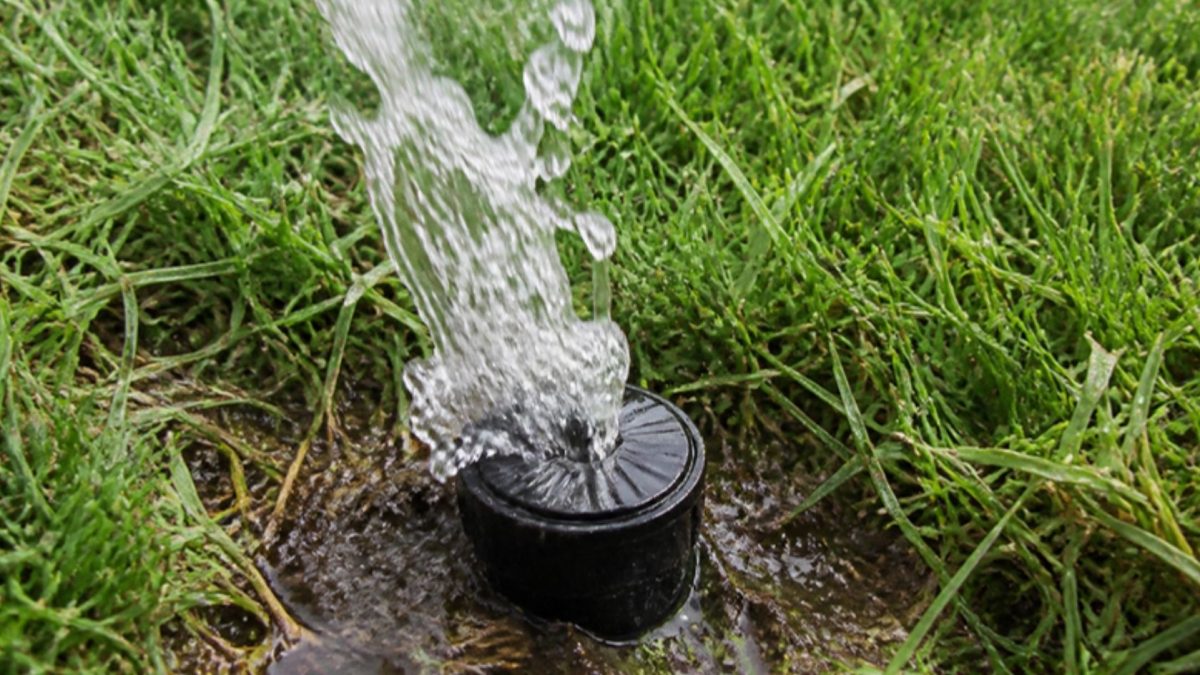
- Utah State University Extension recommends turning on each zone monthly and looking for sunken, broken, tilted or clogged heads.
- UF/IFAS notes clogged nozzles cause dry spots but can often be cleaned quickly.
- Sunken heads can be raised with a riser extension, and tilted heads straightened by resetting the soil around them.
- Adjust heads so they water only the landscape, not sidewalks, streets or driveways.
- A whole zone that won’t run, won’t shut off or has low pressure usually points to a valve, pipe or controller problem.
One corner of the lawn is turning brown while the rest looks fine, and when you run the sprinklers you see why. One head is geysering water straight up, another is buried under the grass, and a third is soaking the driveway. Most sprinkler problems come down to a few heads, and many of them are simple to fix yourself.
At TurnKey Lawn Care, sprinkler repair and adjustment are part of the irrigation work we do across the metro. If the fix turns out to be bigger than a head, request a free estimate and the price is agreed before any work starts.
This guide covers how to inspect a system, how to fix the most common head problems, and the signs that the real problem is a valve, pipe or controller rather than the head itself.
Start with an inspection
Before fixing anything, find out what’s wrong. Utah State University Extension recommends turning on each irrigation zone monthly and looking for sunken, broken, tilted or clogged heads, then making the necessary repairs. UF/IFAS Gardening Solutions suggests scheduling system checks when the clocks change in spring and fall, so maintenance doesn’t get forgotten. Walk each zone while it runs and look for these problems:
- Heads that don’t pop up or are buried by grass
- Heads spraying at an angle or throwing water to one side
- Geysers or bubbling water from a broken head or fitting
- Weak, misty or uneven spray from a clogged nozzle
- Water landing on pavement, the house or fences
- Soggy spots or puddles that stay wet between cycles
Mark each problem head with a small flag as you go. It’s easy to lose track of which head needs what once the water shuts off, and a quick photo of each flagged head helps too.
Common head problems and fixes
| Problem | What you see | Typical fix |
|---|---|---|
| Clogged nozzle | Weak or uneven spray, dry spots | Remove and clean the nozzle and any filter screen |
| Sunken head | Spray blocked by grass | Raise it with a riser extension |
| Tilted head | Water thrown to one side | Dig around it, straighten it, and firm the soil back |
| Misaligned spray | Water on pavement or the house | Rotate the head or adjust its arc |
| Broken head | Geyser or no spray at all | Replace the head or its internal parts |
| Warped old nozzle | Irregular spray pattern | Replace the nozzle |
Clogged nozzles
UF/IFAS notes that clogged nozzles can cause dry spots in the landscape, but can often be cleaned in no time at all. Utah State adds that some sprinklers have built-in filter screens that should be cleaned and replaced if necessary. Pull the head up, unscrew the nozzle, rinse out any grit and clean the screen underneath. Flush the head briefly with the water on before putting the nozzle back, so debris in the line clears.
Sunken heads
Grass grows up around heads over time and blocks the spray. UF/IFAS notes it’s not uncommon to raise heads a couple of times a year so they pop up above the turf. Utah State recommends using a riser extension to bring a sunken sprinkler to the proper level.
Tilted heads
UF/IFAS explains that tilted heads throw more water to one side, causing dry spots. Utah State’s fix is to remove the soil around the head, readjust it so it sits straight, and replace the soil.
Misaligned spray
UF/IFAS recommends adjusting heads so they water only the landscape, not sidewalks, streets or driveways. Most spray heads rotate by hand, and many have an adjustable arc and throw distance.
Want this handled instead of doing it yourself?
Send the details and we will price it. Free estimate, no obligation.
How to replace a broken head
A cracked or broken head needs replacing. The general steps are straightforward:
- Get a matching replacement. Take the old head or its model number to the store so the new one matches the pop-up height, spray type and connection.
- Turn off the water. Shut off the zone or the system so the line isn’t under pressure.
- Dig carefully around the head. Use a small trowel and watch for the pipe and fittings below.
- Unscrew the old head. Hold the fitting steady so you don’t crack the pipe underneath.
- Keep debris out of the open pipe. Dirt in the line can clog the new head and others on the zone.
- Install the new head. Thread it on, sealing the threads as the manufacturer recommends, and set it level with the soil.
- Flush and test. Run the zone briefly, check for leaks and adjust the spray pattern.
Some heads don’t need to be dug up at all. On many models, the internal mechanism can be pulled out from the top and replaced, leaving the body in the ground. If y