
What Is a French Drain, and Does a Soggy New Orleans Yard Need One
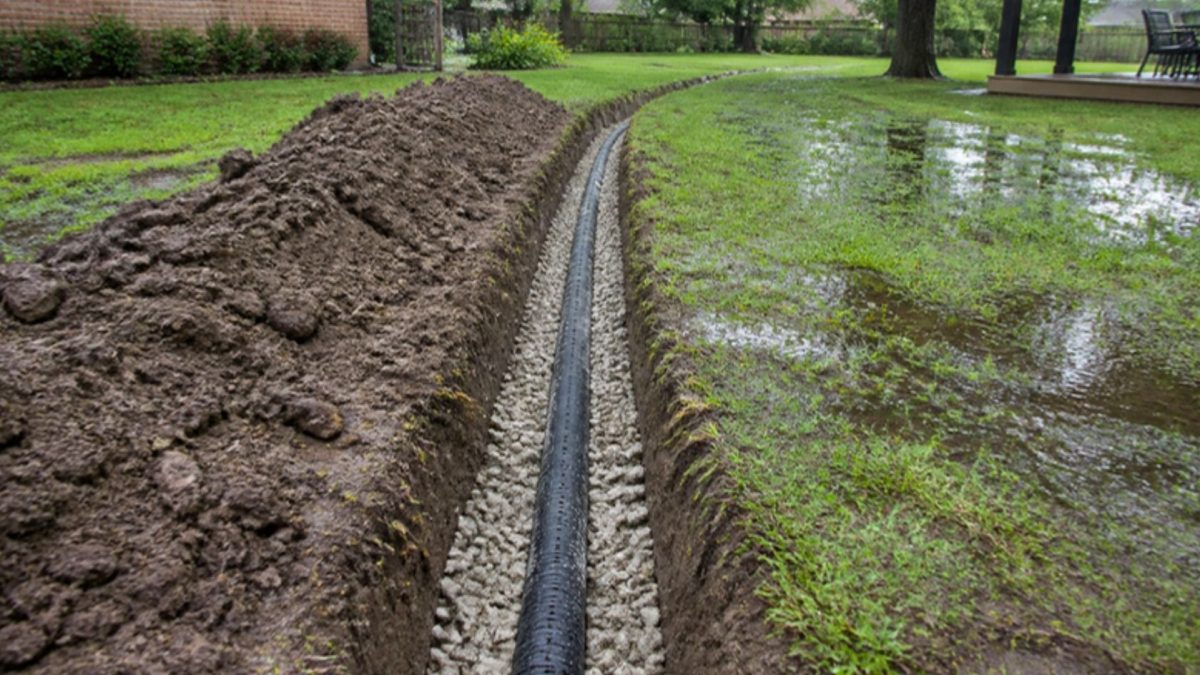
- LSU AgCenter describes a French drain as a system that evacuates water from saturated areas.
- A typical build is a trench 12 to 18 inches wide and 18 to 24 inches deep, with a 4-inch perforated pipe in washed gravel.
- Geotextile fabric keeps soil from clogging the gravel, and the trench must slope so water moves toward an outlet.
- The water needs somewhere to go, such as a pop-up emitter, ditch or low area, or the drain simply fills up.
- Call Louisiana 811 before digging so underground utilities are marked.
- What a French drain is
- How a French drain is built
- Where the water goes
- Signs your yard might need one
- When a French drain isn't the answer
- French drains, swales, dry wells and rain gardens
- Planning and installing a French drain
- Maintenance and common problems
- Can you install a French drain yourself
- Frequently asked questions
After every afternoon storm, the same corner of the backyard turns into a shallow pond. The grass there is thin and yellow, the soil squishes for days, and mosquitoes seem to find it first. French drains come up in almost every conversation about wet yards in New Orleans, and for good reason, but they only work when they’re the right fix and built the right way.
At TurnKey Lawn Care, drainage work is part of the landscaping we do across the metro. If a part of your yard stays wet, request a free estimate and we’ll find out why before recommending anything.
This guide explains what a French drain is, how it’s built, when a yard needs one, the alternatives, and the maintenance and mistakes to know about.
What a French drain is
The LSU AgCenter guide to installing and maintaining a French drain describes it as a system that helps with excess water by giving it a path out of saturated areas. In simple terms, it’s a buried channel. Water soaks down into a gravel-filled trench, enters a perforated pipe at the bottom, and flows along the pipe to a place where it can safely drain away. It works below the surface, so once the trench is backfilled and the grass or mulch is back, most of the system is out of sight. The LSU guide, written by Damon Abdi and Jeb S. Fields, notes that poor drainage creates uncomfortable conditions for plants, people and property. It lists the places where keeping water from building up matters most: near structures and foundations, along foot-traffic pathways, and around sensitive plants. Those are common trouble spots in New Orleans yards too. Water sits against the slab after a storm, the path to the back gate stays muddy for days, and a bed of shrubs keeps losing plants to wet roots. Each of those is a spot where water collects in the soil and has no way out.
What the finished drain looks like
A French drain doesn’t have to leave a visible scar across the yard. LSU describes two finishes. The gravel can be carried all the way to the surface, which looks deliberate and lets water soak in quickly. Or a thin layer of topsoil can go over the gravel so grass grows across the drainage path. A gravel finish works well along a bed edge or beside a walkway. A grassed finish suits a drain that crosses the lawn, where a strip of stone would interrupt mowing. The choice depends on where the drain runs and how much water it needs to take in from the surface.
How a French drain is built
LSU describes the standard construction:
| Component | Typical specification from LSU | Its job |
|---|---|---|
| Trench | 12 to 18 inches wide, 18 to 24 inches deep | Collects water from the surrounding soil |
| Slope | Enough fall to move water in the right direction | Carries water toward the outlet |
| Perforated pipe | Typically 4 inches in diameter | Channels collected water along the trench |
| Gravel | Washed gravel, typically about 1 inch in size | Lets water move freely to the pipe |
| Geotextile fabric | Laid in the base and up the trench walls | Keeps soil from washing in and clogging the gravel |
LSU explains that without the fabric, washed-in soil mixes into the gravel, clogs the spaces between stones and reduces drainage. Skipping the fabric invites exactly that clogging.
Want this handled instead of doing it yourself?
Send the details and we will price it. Free estimate, no obligation.
Where the water goes
A French drain moves water, but it needs a destination. LSU notes water can be sent to ponds, ditches, culverts and low-lying areas on the property. It also describes pop-up drainage systems. When water builds up inside the pipe, the pressure pushes open a downstream fitting that lets water spread out over a larger area, then the fitting closes again. The outlet is often the hardest part in New Orleans. Flat lots leave fewer places for water to go, and a drain with nowhere to empty simply fills and stays full. Planning the outlet comes before digging the trench.
Signs your yard might need one
A French drain makes sense when water collects in the soil and needs a path out. Common signs:
- A low area that stays soggy for a day or more after rain
- Water running across the yard toward the house or a patio
- Grass that thins, yellows or rots in the same wet spot every season
- Dollarweed and other moisture-loving weeds taking over one area
- Soil that squishes underfoot long after the rest of the yard is dry
Wet areas also affect the lawn itself. LSU links poor drainage to large patch disease in St. Augustine and lists it among the stresses behind take-all root rot. Our post on dollarweed