
How to Edge a Flower Bed So the Line Holds Through Summer
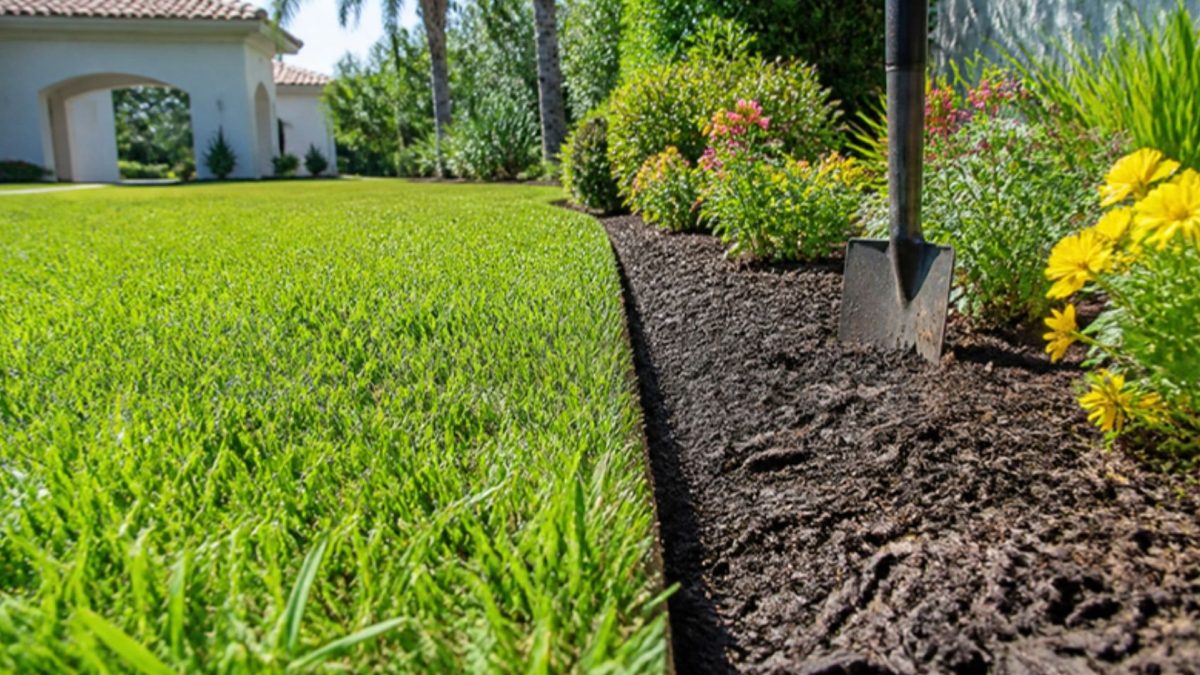
- LSU AgCenter notes edging keeps turfgrass out of beds and helps stop mulch and fertilizer from washing out.
- Where the bed sits below the lawn, a sharp spade can cut an effective edge that may not need any added barrier.
- Plastic edging is cheaper and easier to install, but LSU notes it usually doesn’t last as long as steel.
- Southern turf grows fast, and LSU suggests edging every couple of weeks in the Deep South.
- LSU finds mechanical edging generally superior to herbicides along turfgrass edges.
- Why a bed edge matters
- Why grass keeps creeping into Louisiana beds
- Edging options compared
- How to cut a clean spade edge
- Choosing a physical border
- Shaping the bed line
- Recovering an overgrown edge
- How often to re-edge in a Louisiana yard
- Tools for keeping the line
- Why not just spray the edge
- Pair the edge with good mulch
- Frequently asked questions
In April the bed edge looks crisp. By July, St. Augustine runners have crept a few inches into the mulch, the line has gone wavy, and grass is growing up through the pine straw around the shrubs. In a Louisiana summer, an edge needs regular attention to hold its line.
At TurnKey Lawn Care, edging and bed maintenance are part of the regular lawn and landscaping work we do across the metro. If you’d rather have your edges kept sharp for you, request a free estimate and the price is agreed before any work starts.
This guide covers why edging matters, how to cut a clean spade edge, which edging materials hold up best, and how often to re-edge in a Southern yard.
Why a bed edge matters
An edge is more than a finishing touch. In an LSU AgCenter article on landscape edging concepts, Damon Abdi and Jeb S. Fields write that a clean, crisp line gives a landscape a professional look. They also describe its practical jobs. A good edge prevents turfgrass from creeping into beds and stops mulch and fertilizer from washing out. A solid edge also means you replenish mulch less often, according to the same article, and it gives you a backstop to trim against with a string trimmer.
Why grass keeps creeping into Louisiana beds
Warm-season grasses spread sideways. A Clemson Extension article on St. Augustine and centipede notes both produce stolons, commonly called runners, which travel along the soil surface and root as they go. LSU AgCenter engineer Richard Parish puts it plainly in his guide to turf edgers: turfgrasses grow rapidly and aggressively in the South, and if not edged back regularly, Southern turf will grow right over sidewalks, driveways and flower beds. That growth is why an edge cut once in spring rarely survives to fall. The grass never stops pushing during the growing season.
Want this handled instead of doing it yourself?
Send the details and we will price it. Free estimate, no obligation.
Edging options compared
There are two broad approaches: a natural edge cut into the soil, or a physical border installed along the bed.
| Edge type | Look | What LSU notes |
|---|---|---|
| Spade-cut natural edge | Clean, invisible line | Where the bed sits below soil level, a sharp spade can cut an effective edge that may not need a barrier |
| Plastic edging | Uniform, low-profile | Lighter, cheaper and easy to install, but often doesn’t last as long as steel |
| Steel edging | Thin, crisp, modern line | More durable than plastic, at a higher cost |
| Concrete curb | Solid, permanent | Provides a rock-solid edge |
| Pavers, brick or stone | Finished, decorative | Options where more masterful masonry is wanted |
| Landscape timbers | Rustic, natural | A more naturalized look that holds mulch in place |
Abdi and Fields also note edging can sit above or below the soil surface, depending on whether you want a raised bed or a sunken one.
How to cut a clean spade edge
A spade edge costs nothing but time, and it’s the look many homeowners want. Here’s the process:
- Mark the line. Lay a garden hose or rope along the bed to set the shape, and adjust it until the curves look smooth from the house and the street.
- Check for buried lines. Irrigation pipe and low-voltage wiring often run along bed edges, so know where they are before cutting.
- Cut straight down along the lawn side. Push a sharp, flat spade or half-moon edger straight down along the line, working your way around the bed.
- Angle the bed side. Cut in from the bed side at an angle so the soil forms a V-shaped trench against the straight lawn edge.
- Remove the wedge. Lift out the loosened soil and grass, and shake the soil back into the bed.
- Pull runners. Follow any grass runners into the bed and pull them out rather than just cutting them off.
- Mulch up to the edge. Bring mulch to the bed side of the trench without filling it, so the gap stays visible.
That V-shaped trench mirrors what professional machines do. In his article on landscape bedshapers, Parish describes bed-opening blades that cut a furrow that is straight-sided on the outside and tapered toward the bed.
Choosing a physical border
A spa