
Crape Murder: How to Prune Crape Myrtles Without Ruining Them
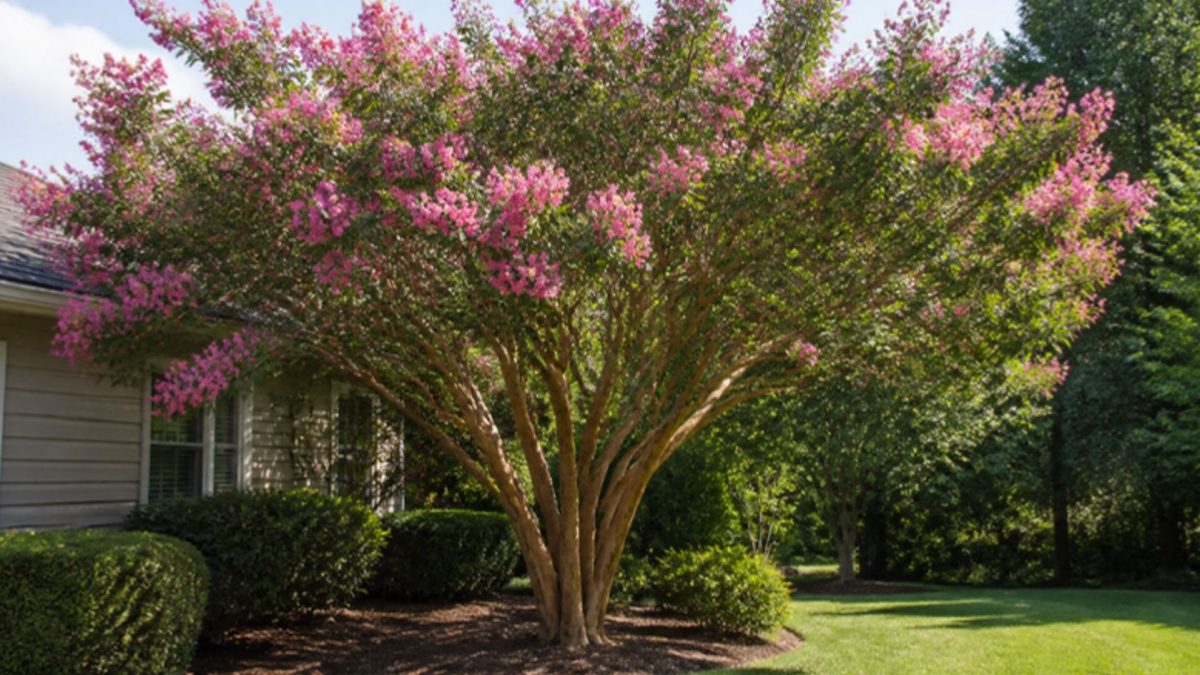
- Crape murder is the unnecessary topping of crape myrtles to reduce their height, according to LSU AgCenter.
- Topping creates large wounds, weak regrowth and knobby cut sites, and LSU notes it shortens the tree’s life.
- LSU AgCenter says crape myrtles require little if any pruning, and when they do, they should be thinned rather than topped.
- Late fall through late winter is the ideal pruning window in Louisiana, with February a common choice.
- A topped tree can be improved by keeping two or three strong shoots per knob and removing the rest, as Virginia Tech Extension recommends.
Every winter, crape myrtles across New Orleans get cut back to bare stumps. By spring, each stump sprouts a bundle of long, thin shoots, and by the following winter the cycle starts again. Gardeners and horticulturists call it crape murder.
At TurnKey Lawn Care, tree and shrub pruning is part of the landscaping work we do across the metro. If your crape myrtles need shaping, request a free estimate and the price is agreed before any work starts.
This guide explains what crape murder is, why it harms the tree, how to prune a crape myrtle properly, and how to repair one that’s already been topped.
What crape murder is
In an LSU AgCenter article titled Crape Murder, Lee Rouse and Allen Owings write that most knowledgeable horticulture professionals and home gardeners call the unnecessary topping of crape myrtles to reduce height crape murder. The tree is cut back to the same spot on its main trunks year after year. LSU horticulturist Heather Kirk-Ballard describes it in her article on crape myrtle controversies as a crape myrtle hacked back to just a trunk, a sight in landscapes across the South. A related European technique called pollarding cuts trees back to the same point every year on purpose. Owings notes in a 2015 LSU article that gardeners who understand the consequences can still choose it, but it shortens the tree’s life and gives up its natural shape.
Why people top crape myrtles
LSU horticulturist Dan Gill, in his article on pruning crape myrtles properly, lists the usual reasons:
- The belief that severe cutting produces larger flower clusters
- The idea that it makes young trees look fuller
- Trying to keep a tree smaller than its natural size
- Trying to change the tree’s natural shape
Gill is direct about it: cutting back crape myrtle trees is not, and never has been, the preferred way of handling them. Most of those goals are better met another way, or by choosing a different plant.
Want this handled instead of doing it yourself?
Send the details and we will price it. Free estimate, no obligation.
What topping does to the tree
The damage builds up over years. LSU extension specialists describe several problems:
Wounds and decay
Gill explains that cutting back crape myrtles creates large wounds that can let fungal decay organisms in. He says pruning like this shortens the life of the tree.
Weak, disease-prone growth
The shoots that sprout from topping cuts look vigorous. Owings notes that growth is structurally weak and more susceptible to fungus diseases such as powdery mildew. Kirk-Ballard adds that excessive pruning stresses the trees and makes them more susceptible to insects and disease.
Knobs at the cut sites
Kirk-Ballard writes that repeated pruning in the same spot causes unsightly knobbing at the cut site. Those knobs, sometimes called knuckles, are the swollen stubs you see on topped trees in winter.
Drooping flowers
Topping can produce bigger flower clusters, which is why people do it. Owings explains the catch: the added weight on the ends of long, thin branches makes them bend over awkwardly, especially after rain. Gill adds that a smaller, topped tree produces fewer flower clusters overall.
When to prune crape myrtles in Louisiana
Rouse and Owings put the ideal window at late fall through late winter. Kirk-Ballard notes winter is best because you can see the tree’s form clearly once the leaves are down. An older LSU article by Henry Harrison on pruning and fertilizing crape myrtles names February as a good time to prune. He also warns that drastic pruning, or pruning after new growth starts in spring, can delay summer flowering.
| Task | When | Source |
|---|---|---|
| Structural and thinning pruning | Late fall through late winter | LSU AgCenter |
| Removing suckers at the base | Each winter, or while young | LSU AgCenter; Virginia Tech |
| Removing faded flower clusters | Right after flowers fade in summer | LSU AgCenter; Clemson Extension |
| Avoid | After new spring growth, and late summer or early fall | LSU AgCenter; Virginia Tech |
How to prune a crape myrtle the right way
Kirk-Ballard quotes retired LSU horticulturist Allen Owings: crape myrtles require little if any pruning. When