
Landscaping Around Trees Without Damaging the Roots
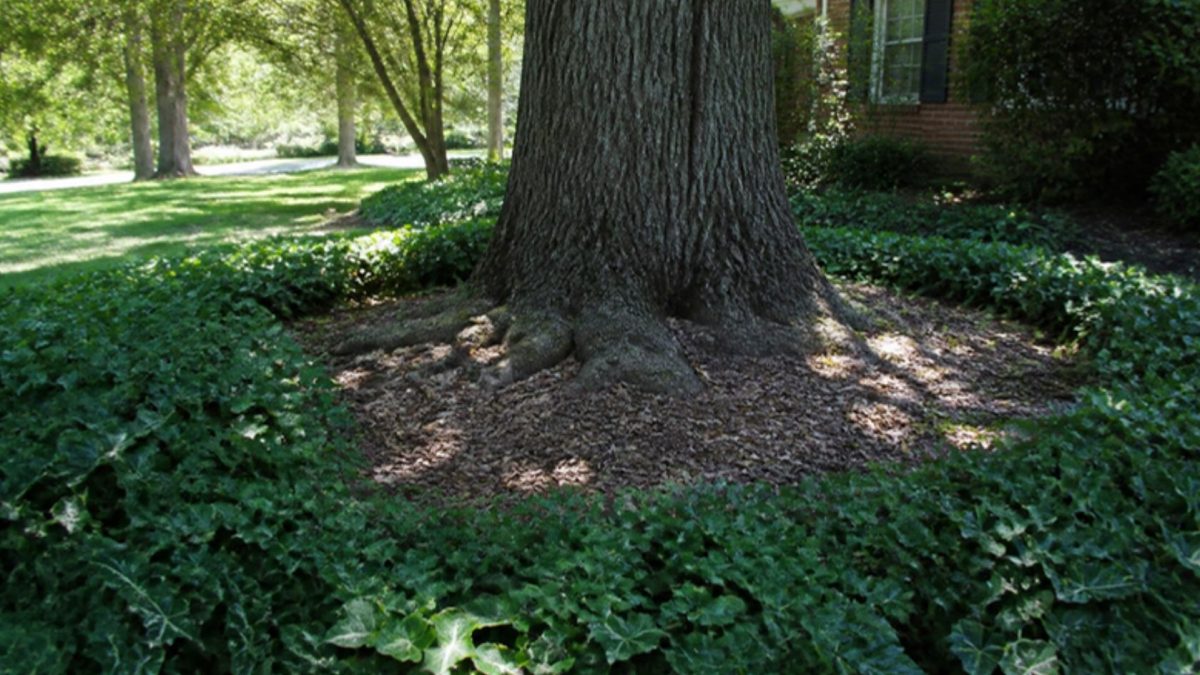
- LSU AgCenter notes a tree’s feeder roots sit in the surface soil and spread far beyond the canopy.
- Adding a large volume of soil over roots cuts off oxygen and can kill the tree, so avoid raised beds around trunks.
- Penn State Extension recommends adding no more than 2 inches of soil or compost, and none within 1 foot of the trunk.
- Clear grass and weeds with a hand trowel, and use small plants that need only small holes.
- Finish with an inch or two of finely shredded mulch, kept off the trunk.
- Where tree roots really are
- What harms tree roots
- What to do and what to avoid
- How to plant under a tree, step by step
- Choosing plants for under trees
- Mulch rings: the simplest option
- What about exposed roots
- Signs a tree is struggling after yard work
- Protect trees during other yard projects
- Frequently asked questions
The ground under a big shade tree is one of the hardest spots in any yard. Grass thins out, roots break the surface, and bare dirt takes over.
The natural instinct is to build a bed around the trunk, add fresh soil and plant it up. That instinct is exactly what extension horticulturists warn against.
At TurnKey Lawn Care, planting and bed work around trees is part of the landscaping we do across the metro. If you’d like help with the space under your trees, request a free estimate and the price is agreed before any work starts.
This guide covers where tree roots actually are, the mistakes that harm them, and how to plant and mulch under a tree the safe way.
Where tree roots really are
Most people picture roots running deep, mirroring the branches. In reality, the roots that do most of the work are shallow and wide. In an LSU AgCenter article on protecting trees, horticulturists Dan Gill, Allen Owings and John Young explain that a tree’s important feeder roots are in the surface soil and radiate out in all directions far beyond the tree’s crown spread. They add that the critical root zone is, at minimum, equal to the crown spread. And they note roots need oxygen, adequate moisture and organic soil components to survive. So the area under and around a tree is the tree’s feeding zone, and whatever you do there affects the whole tree.
What harms tree roots
LSU’s horticulturists put it bluntly: fill dirt, soil compaction, soil contaminants and damaging or cutting roots will kill trees. The most common landscaping mistakes fall into those categories.
Raised beds and added soil
A raised bed built around a trunk is the classic mistake. Penn State Extension, in its article on underplanting trees, explains that adding a large volume of soil or compost on top of roots compacts the soil and prevents the gas exchange roots depend on. It says this leads to the tree’s death, and advises against creating a raised bed around a tree. Texas A&M’s Earth-Kind program, in its guide to protecting trees from grade changes, explains that fill placed over the root system reduces the oxygen supply to the roots. It notes decline can take anywhere from several months to 3 to 5 years before the tree dies, which is why the damage often isn’t connected to its cause.
Digging and tilling
Tilling or digging with a spade under a tree slices through the fine feeder roots near the surface. Penn State recommends clearing grass and weeds with a hand trowel, noting shovels and spades can nick roots or trunk bark and expose the tree to disease and insects.
Compaction and trenching
Heavy equipment, parked cars and constant foot traffic compress the soil and squeeze out the air roots need. LSU also warns against trenching in the root zone for utilities or any other reason, and against grading or filling there. Keeping cars, equipment and material piles off the root zone during any project protects the soil structure roots rely on.
Mulch piled against the trunk
Mulch helps roots, but not when it’s heaped against the bark. Our guide to mulch volcanoes explains the damage that causes.
Want this handled instead of doing it yourself?
Send the details and we will price it. Free estimate, no obligation.
What to do and what to avoid
| Avoid | Do instead | Source |
|---|---|---|
| Building a raised bed around the trunk | Add no more than 2 inches of soil or compost | Penn State Extension |
| Adding soil against the trunk | Keep added soil at least 1 foot from the trunk | Penn State Extension |
| Tilling or digging with a spade | Clear grass and weeds with a hand trowel | Penn State Extension |
| Planting large shrubs in big holes | Use plugs, seedlings or small divisions | Penn State Extension |
| Clay or silty fill soil | Use a coarse organic mix if any bed soil is needed | LSU AgCenter |
| Trenching or grading in the root zone | Route utilities and grade changes elsewhere | LSU AgCenter |
How to plant under a tree, step by step
- Clear by hand. Remove grass and weeds with a hand trowel rather than a spade or tiller.
- Add only a thin layer