
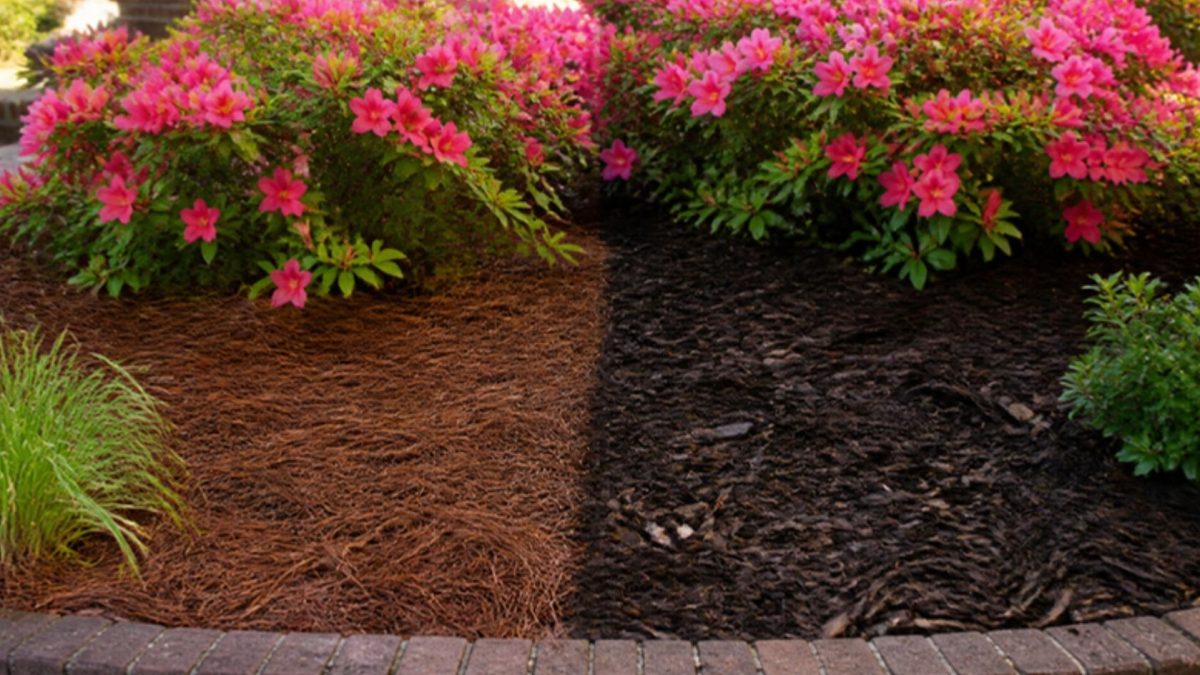
- LSU AgCenter calls pine straw an excellent choice for both vegetable and ornamental beds, and it breaks down more slowly than leaves.
- Clemson Extension notes pine needles interlock and stay in place better than most mulches, especially on a slope.
- Large pine bark nuggets can float and may not stay in place during heavy rain, according to Clemson.
- LSU puts the best overall mulch depth at 2 to 4 inches, with less around bedding plants and new transplants.
- LSU discourages cypress mulch because harvesting cypress can add to the loss of coastal wetlands.
- Why mulch Louisiana beds at all
- Pine straw: what it does well
- Bark and other mulches: what they do well
- Side-by-side comparison
- What about cypress, leaves and stone
- How to choose for your beds
- How deep to spread it
- Laying pine straw or bark the right way
- How much to buy
- How often to refresh it
- Frequently asked questions
Drive through any New Orleans neighborhood in spring and you’ll see both. One house has neat beds of dark pine bark, the next has a golden layer of pine straw around the azaleas. Both are good choices, and both are recommended by extension horticulturists, but they behave differently in heavy rain, on slopes and over time.
At TurnKey Lawn Care, mulching and bed maintenance are part of the landscaping work we do across the metro. If you’d rather have your beds refreshed for you, request a free estimate and the price is agreed before any work starts.
This guide compares pine straw with bark and other common mulches, explains what each does well, and covers how much to use and how often to top it up in a Louisiana bed.
Why mulch Louisiana beds at all
Before comparing materials, it helps to know what mulch is doing for a bed. LSU AgCenter’s Dan Gill, in the AgCenter’s guide to proper mulching, lists the main benefits. Mulch conserves moisture, moderates soil temperature, prevents soil compaction, controls weeds and improves appearance. He also notes that organic mulches keep soil cooler in summer. In a New Orleans July, that cooler root zone matters to shrubs and bedding plants. Organic mulches decay over time, which is both a cost and a benefit. They have to be replenished, but as they break down they add organic matter to the soil.
Pine straw: what it does well
Pine straw is the dried needles of pine trees, sold in bales. In a 2009 LSU AgCenter article on pine straw mulch, horticulturist Allen Owings writes that it greatly reduces weeding and watering time and releases nutrients and organic matter as it decomposes. The same article lists a long set of benefits for pine straw in the landscape:
- Conserves soil moisture and prevents soil crusting
- Keeps soil temperature more consistent
- Reduces weed seed germination
- Helps keep soil and fungus spores from splashing onto plants
- Reduces the risk of cold damage to roots
- Slows erosion and helps prevent soil compaction
Pine straw’s biggest practical advantage in a rainy climate is that it stays put. The Clemson Home and Garden Information Center mulch factsheet says pine needles tend to interlock and stay in place better than most mulches, especially on a slope. It’s also light and easy to spread by hand. Owings notes a 25-pound bale covers 50 square feet at 3 inches deep, which makes estimating how much you need fairly simple.
Want this handled instead of doing it yourself?
Send the details and we will price it. Free estimate, no obligation.
Bark and other mulches: what they do well
“Mulch” in the garden center usually means bark or shredded wood. In her LSU AgCenter article on mulch, horticulturist Heather Kirk-Ballard describes bark mulches as coming from several types of trees, including pine, cedar and cypress, sold as nuggets or shredded. The two forms behave differently. Kirk-Ballard explains that nuggets break down slowly but don’t stay in place well, while shredded bark gives better coverage but decomposes faster. Clemson describes pine bark as an attractive, usually dark-colored mulch that typically lasts around 2 to 4 years before more is needed. It also notes shredded hardwood decomposes relatively slowly and looks very attractive in beds. That dark, finished look is the main reason many homeowners choose bark. It suits formal beds and front-yard plantings where a tidy appearance matters.
Side-by-side comparison
| Factor | Pine straw | Pine bark nuggets | Shredded bark or hardwood |
|---|---|---|---|
| Stays in place in heavy rain | Very well; needles interlock (Clemson) | Poorly; large nuggets can float (Clemson) | Better than nuggets; gives good coverage (LSU) |
| Best on slopes | Yes (Clemson) | No | Moderate |
| How fast it breaks down | Slower than leaves (LSU) | Slowly (LSU); pine bark lasts about 2 to 4 years (Clemson) | Faster than nuggets (LSU) |
| Look | Natural, golden to brown | Dark, chunky | Dark, even, finished |
| Recommended depth | 2 to 3 inches (Clemson) | Up to 4 inches for coarse mulch (Clemson) | 2 to 3 inches (Clemson) |